
The Alaska pet first aid kit.
What to pack at home, in the car and on the trail, from the certified pet first aid instructors on our Anchorage team. Includes a free printable checklist.
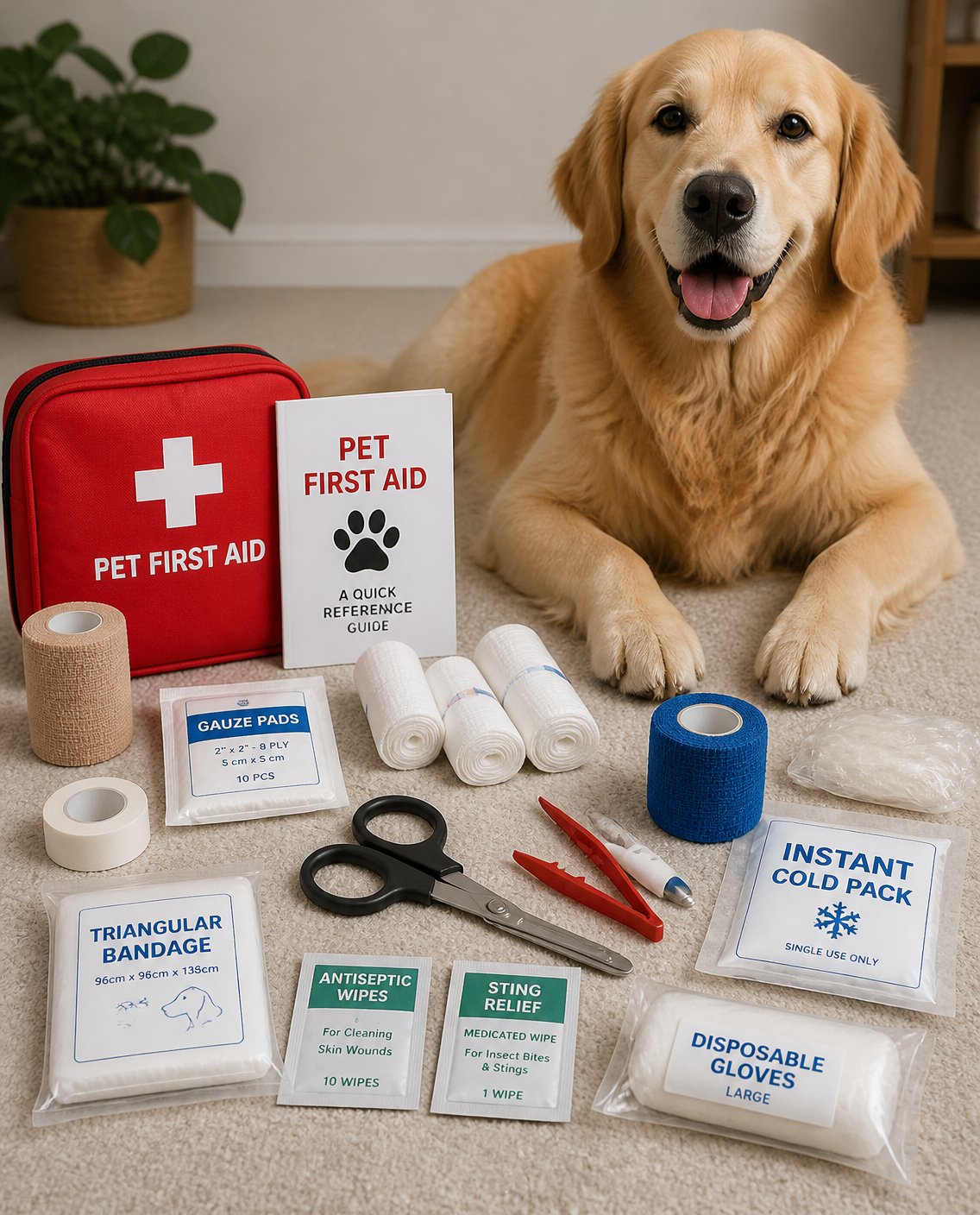
Most pet emergencies don't happen at the vet's door. They happen on a trail outside Eagle River, in the car on the Seward Highway, or in the kitchen at 9 p.m. on a Sunday.
In those first minutes, the right supplies and a calm plan can make a real difference while you get your pet to help. Our team includes certified pet first aid instructors, and this is the kit we recommend every pet family keep on hand.
Want it on one page? The free checklist includes space for your pet's normal vital signs and emergency numbers.
Download the checklistWhy a kit matters here.
Alaska adds a few challenges to pet first aid. Help can be far away when you're on a trail or a long drive. Cold makes shock and blood loss more dangerous. Darkness arrives early for much of the year. And an earthquake can leave you on your own for a while.
A kit doesn't replace your veterinarian. It helps you protect your pet, keep them stable and get them to care safely.
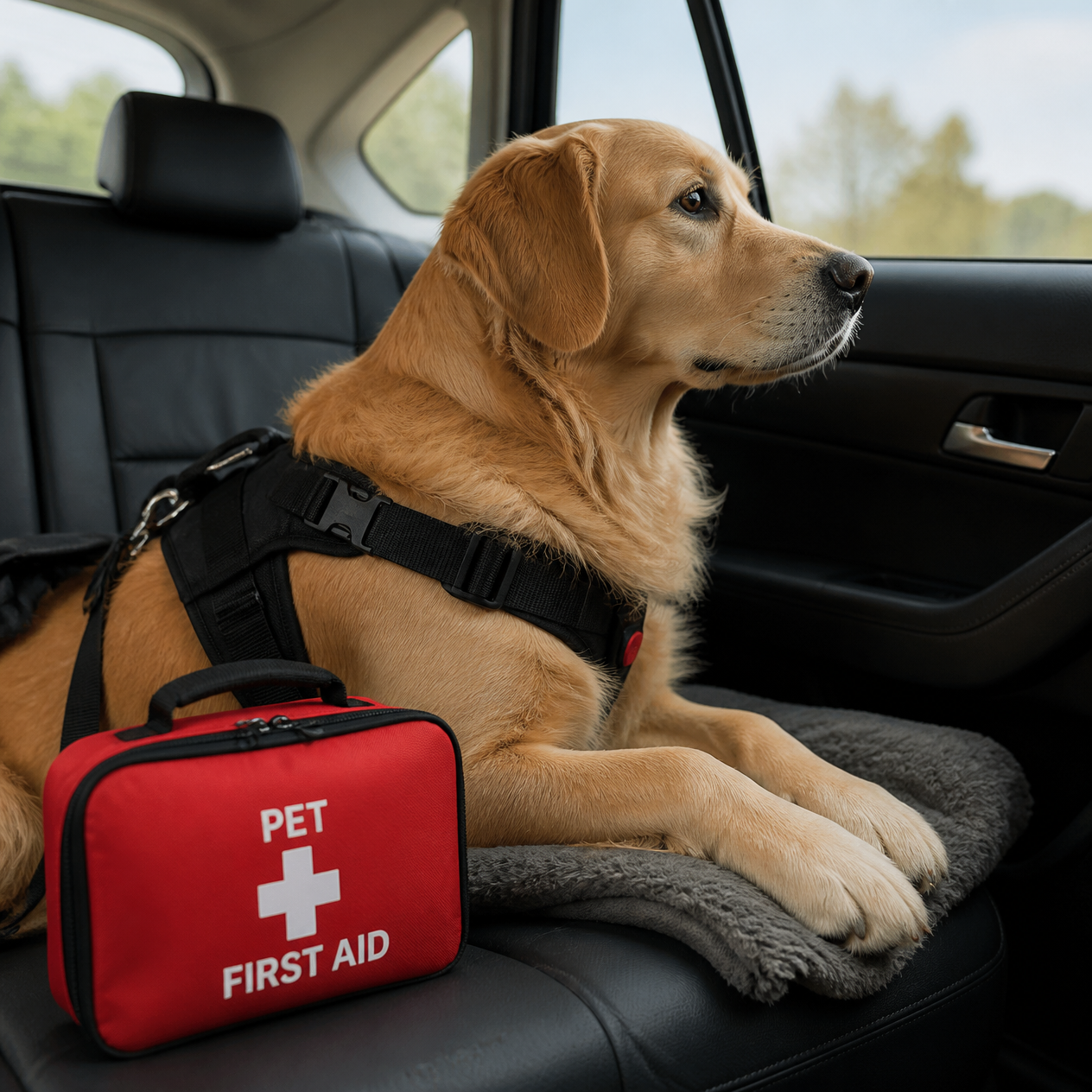
The core kit.
These are the supplies we teach in our Pet First Aid class. Store them together in a labeled bag or bin.
For safe handling
- A muzzle that fits your dog. Even the gentlest pet may bite when hurt or scared. There are also times a muzzle should never be used, which we cover in class.
- A nylon slip-lead leash
- A towel and a blanket, for warmth, restraint or carrying
- Disposable gloves
For wounds and bandaging
- Gauze squares and roll gauze
- Self-adhesive elastic wrap, such as Vetrap
- Adhesive tape
- Bandage scissors
- Antimicrobial ointment
- Grooming clippers, to clear fur around a wound
- Styptic powder and pet nail clippers, for a torn or bleeding nail
- Sterile saline eye wash
For checking and cleaning
- A quick-read rectal thermometer
- Rubbing (isopropyl) alcohol
- Hydrogen peroxide (3%)
For calling for help
- Emergency contact information, including your vet and the nearest 24-hour emergency hospital
- Anything else your veterinarian recommends for your pet
What we add for life up here.
These are our additions for life in Southcentral Alaska. Ask your veterinarian whether any of them suit your pet.
- An emergency (Mylar) blanket. Light, compact and helpful for keeping an injured pet warm on the way to the vet.
- A headlamp with spare batteries. Winter days are short, and you'll want both hands free.
- An insulated water bottle and collapsible bowl. Water freezes fast in a car or pack.
- Booties and paw balm. For ice cuts, salt burns and long winter walks.
- A soft cone (Elizabethan collar). It keeps a pet from licking a wound or pawing at their face. Cornell's veterinary college suggests one for dogs with porcupine quills while you head to the vet.
- Copies of vet records, a current photo and proof of ownership. Helpful if you're evacuated or separated after an earthquake.
- Two weeks of medications, clearly labeled with the dose and schedule, in your emergency go-bag.
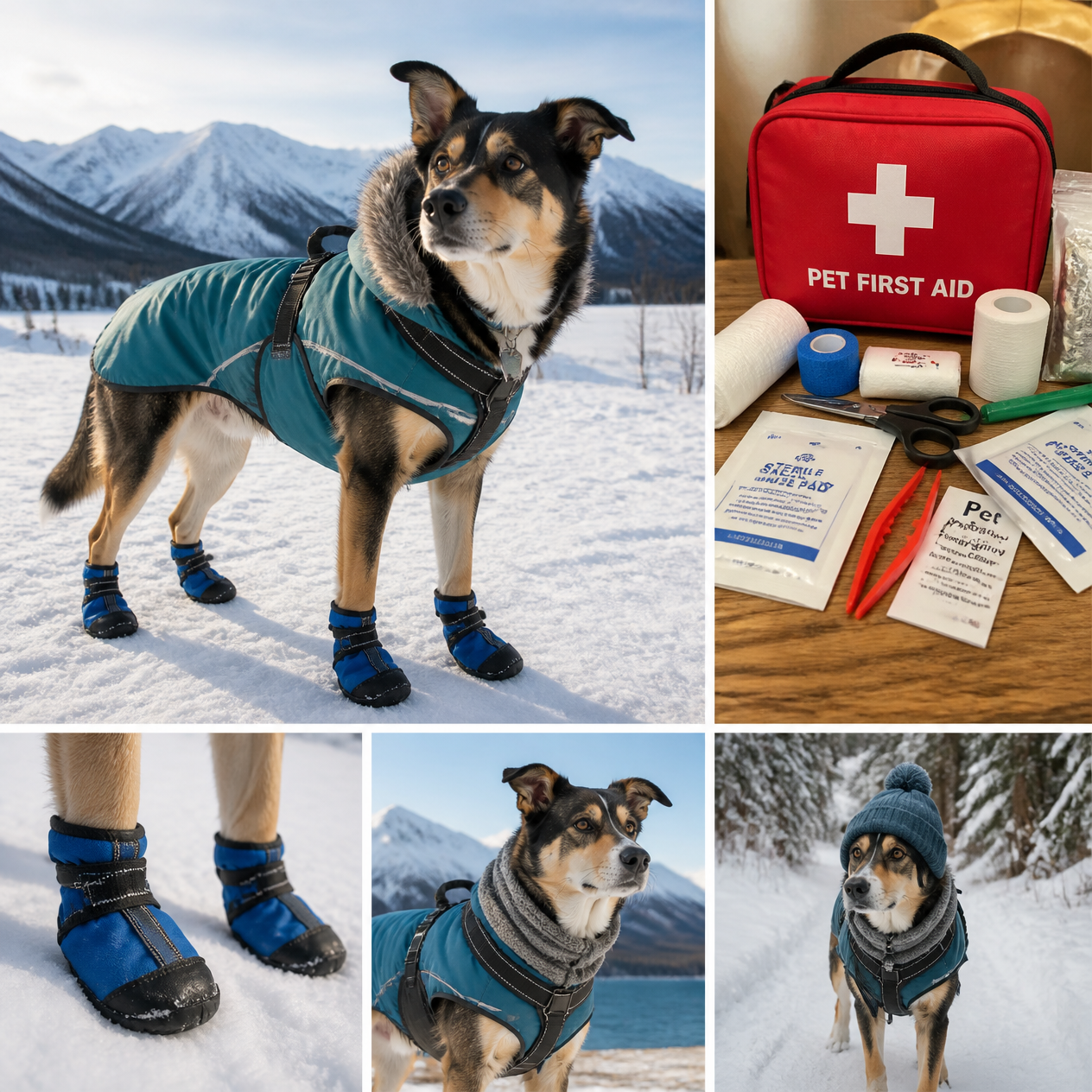
Smaller kits for the car and the trail.
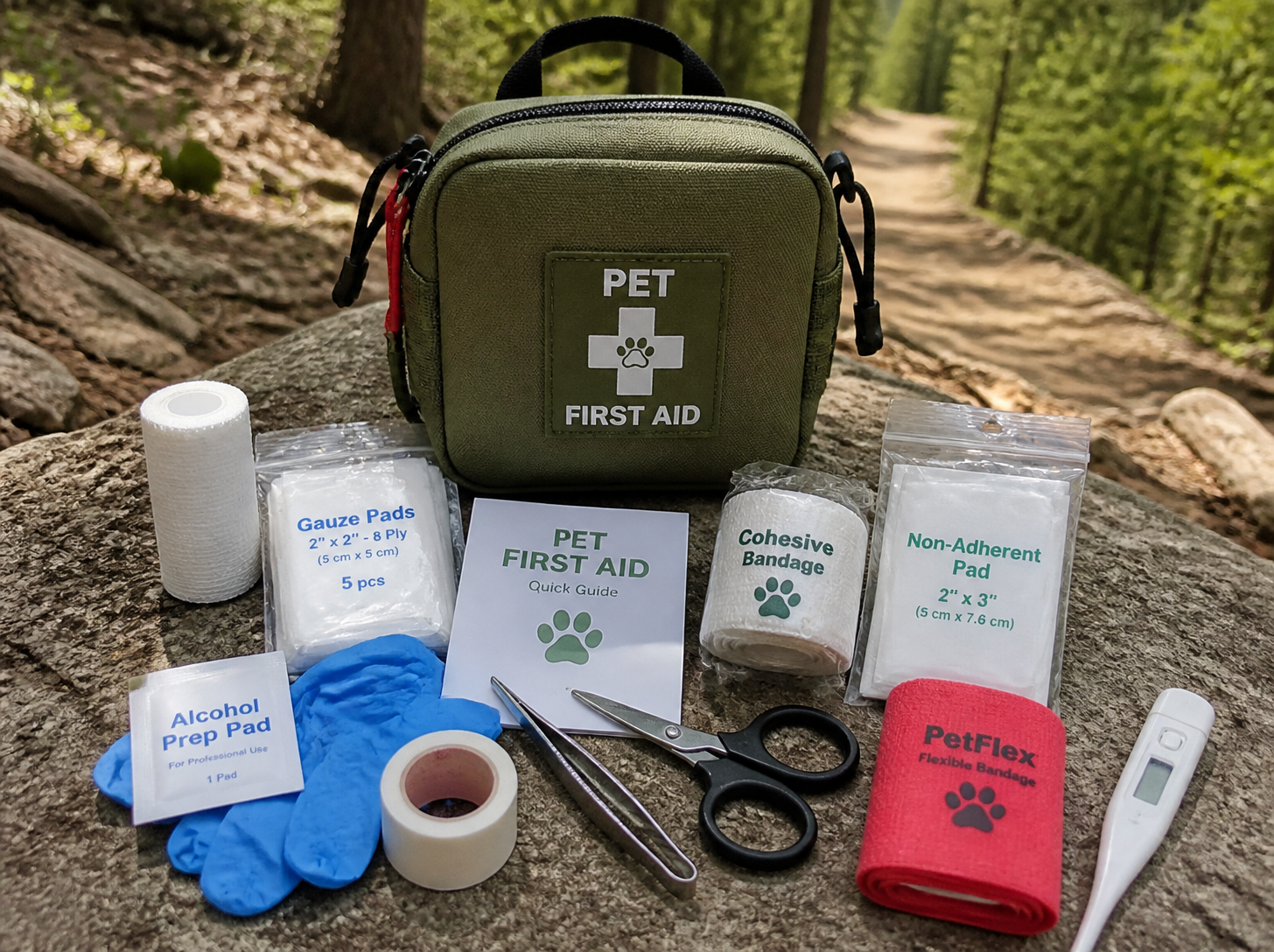
Use what you have.
Everyday items can stand in for first aid supplies. A credit card, for example, can scrape out a bee stinger without squeezing more venom in.
In class, we practice turning what's already in your car or pack into a splint, a bandage or a muzzle.
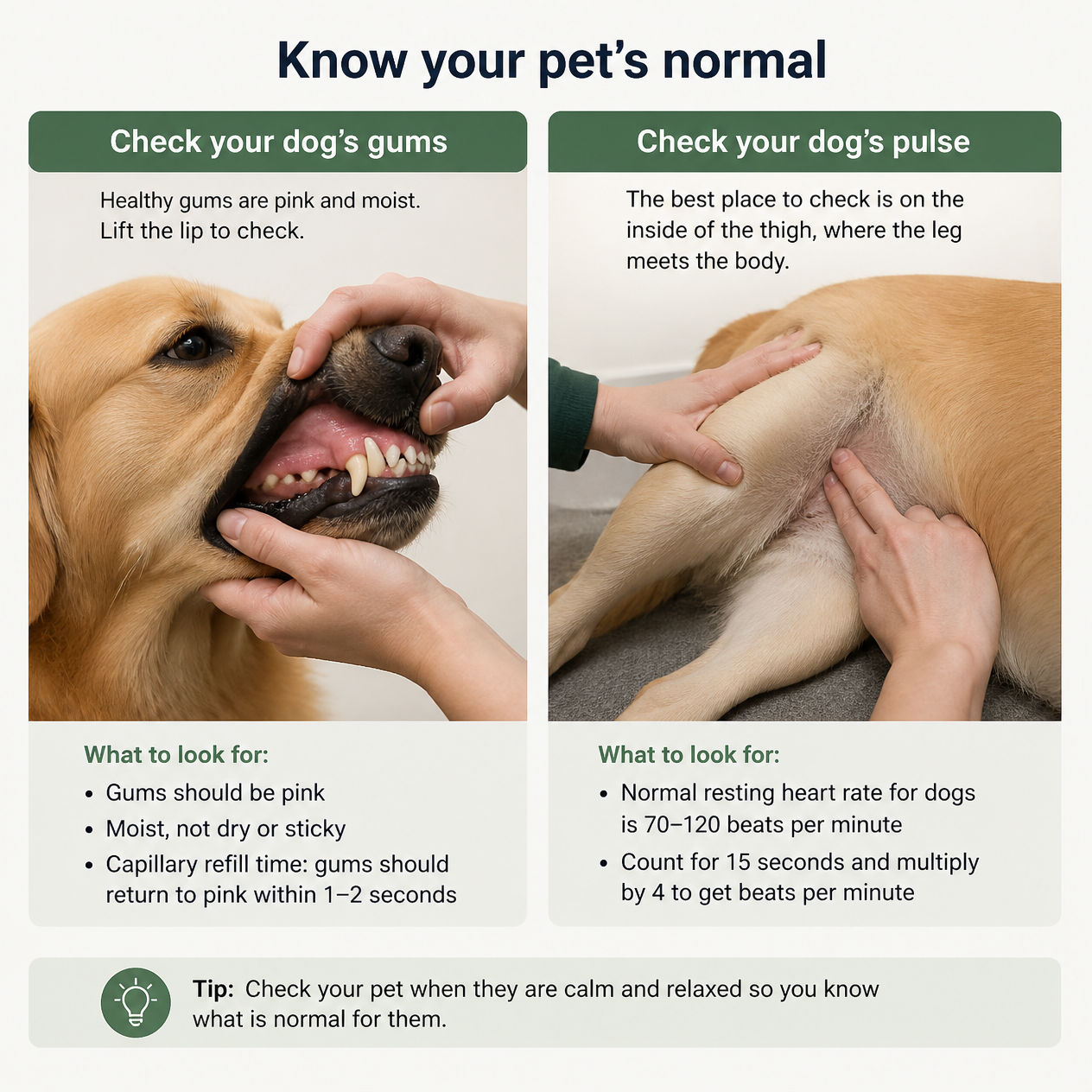
Know your pet's normal.
In an emergency, your vet will want to know your pet's heart rate, breathing, temperature and gum color. Most pet parents have never checked them, and a healthy cat's numbers are quite different from a healthy dog's.
Here's one that surprises people: panting is normal for dogs, but a cat breathing with an open mouth needs a vet right away.
Checking vital signs takes practice, especially on a wiggly pet. In our class, you'll learn where to find a pulse, how to count breaths and what healthy gums look like, then practice on our training dogs. Our checklist has space to record your pet's numbers once you know how.
What not to do.
Some of the most common first aid instincts can make things worse.
- Don't give human medications. Common pain relievers and fever reducers, like aspirin and acetaminophen, can be dangerous for pets. Give only what your veterinarian prescribes.
- Don't make your pet vomit unless a veterinarian or poison control center tells you to.
- Don't use ice packs on an overheated dog. It seems logical, but ice can slow the body's ability to release heat. We teach the right way to cool a pet in class.
- Don't blow-dry a pet after a chemical spill on their coat. Heat can increase how much the skin absorbs.
- Don't pull or cut porcupine quills. Cornell's veterinary college warns that cutting them can make them harder to remove. Keep your dog calm and go straight to the vet.
Keep it ready.
Set a reminder to check your kit twice a year. Replace anything expired or used, and update your phone numbers. Many families pair it with the time change in spring and fall.
Frequently asked questions.
Can I use a human first aid kit for my pet?
Many supplies overlap, like gauze and tape. A pet kit adds items people kits don't have, like a muzzle, a slip lead, self-adhesive wrap and styptic powder.
Do I need a different kit for my cat?
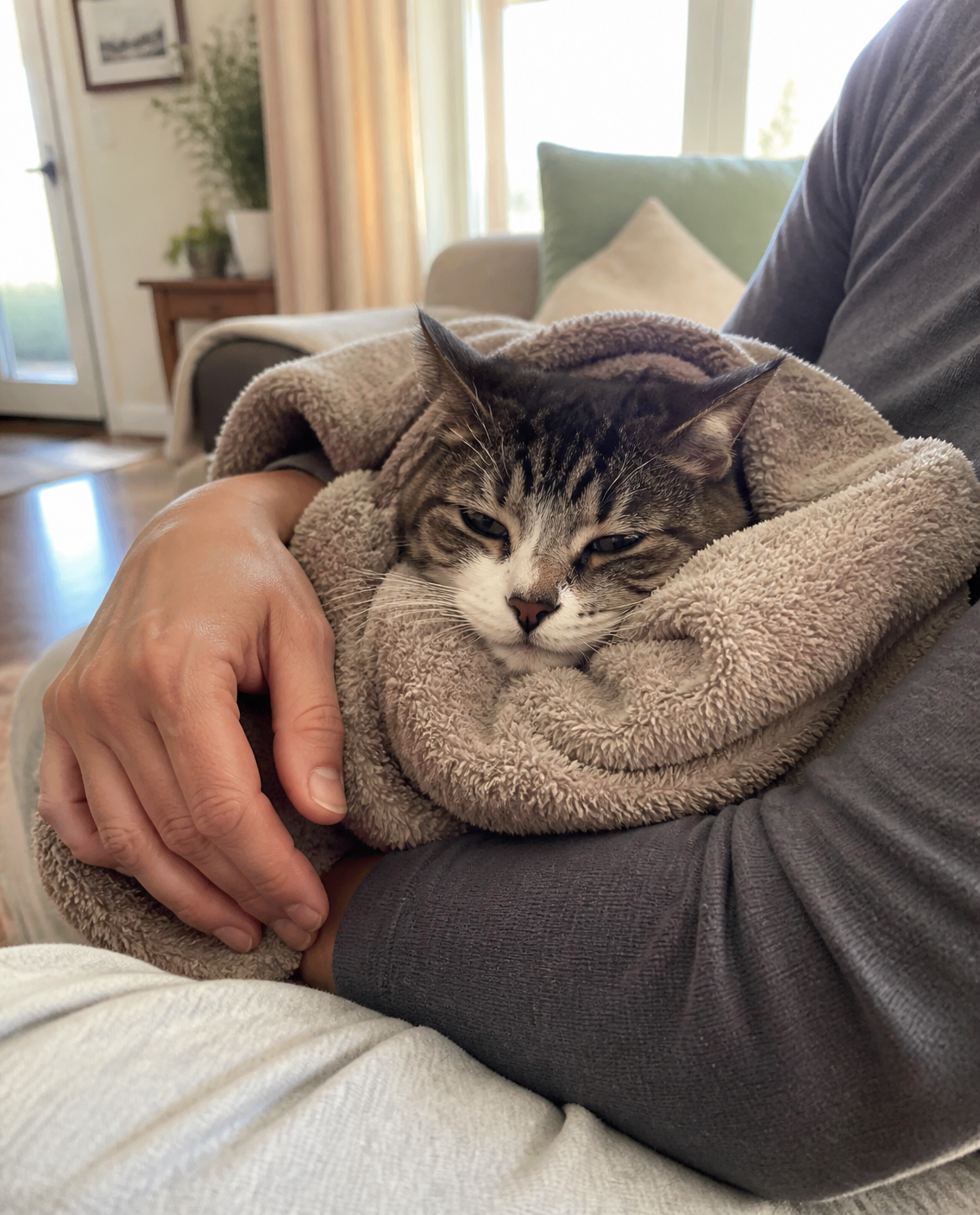
Most supplies are the same. Add a carrier and a thick towel, which help you handle a scared or injured cat safely.
What number do I call for a possible poisoning?
Call your veterinarian, the ASPCA Animal Poison Control Center at (888) 426-4435 or the Pet Poison Helpline at (855) 764-7661. Both are open 24/7, and a fee may apply.
Is reading about first aid enough?
It's a great start, but most of first aid is hands-on: finding a pulse, fitting a muzzle, wrapping a wound that stays put. That's what builds the confidence to act fast.
A kit is only half of being ready.
The other half is knowing what to do when your heart is racing and your pet needs you. Our certified instructors teach hands-on Pet First Aid and CPR classes in Anchorage and Eagle River. You'll practice on training dogs with real supplies, and you'll leave with a certification. Classes cover:
- Checking heart rate, breathing, temperature and gums
- CPR and rescue breathing for dogs and cats
- Choking
- Bleeding, wounds and bandaging
- Safe handling and muzzling
- Poisoning, heatstroke and hypothermia
We also bring classes to pet businesses, rescues, offices and community groups.
Be ready before you need it.
Print the checklist and build your kit this week. Want hands-on practice? Join us for a Pet First Aid class.
Sources: ProPetHero Pet First Aid Student Manual · Arden Moore: Mutt-gyver tricks (IBPSA) · Cornell Riney Canine Health Center: Porcupine quill injuries · AVMA small animal evacuation essentials · Pet Poison Helpline


