
Dogs and moose.
How to read a moose's warning signs and stay safe on Anchorage and Eagle River walks, plus a free pocket card for your jacket or leash bag.
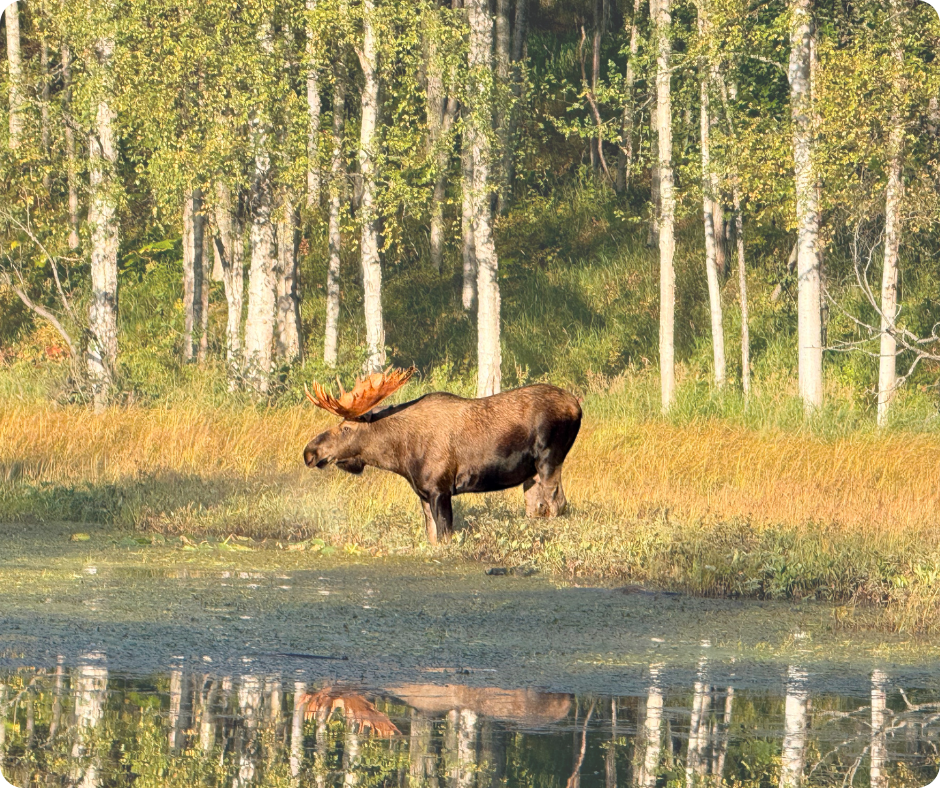
If you walk a dog in Anchorage or Eagle River, you've probably rounded a corner and found yourself a little too close to a moose. Most of the time, the moose keeps browsing and everyone goes home with a story.
But moose are big, and they don't like dogs. According to the Alaska Department of Fish and Game (ADF&G), more people in Alaska are injured by moose than by bears each year. Dogs are often part of the reason a moose feels threatened.
This guide covers why dogs and moose clash, how to read a moose's mood, and what to do if you meet one on a walk.
Keep it in your pocket. Cut out the card and tuck it in your jacket or leash bag.
Download the pocket cardWhy moose and dogs don't mix.
Dogs are close relatives of wolves, one of a moose's natural predators. ADF&G says moose view dogs as enemies and will sometimes go out of their way to kick at one. A moose's kick is powerful enough to seriously injure or kill a dog.
In January 2023, a moose killed a dog in a fenced backyard in East Anchorage. The owner had let the dogs out without knowing a moose was in the yard.
When moose are most on edge.
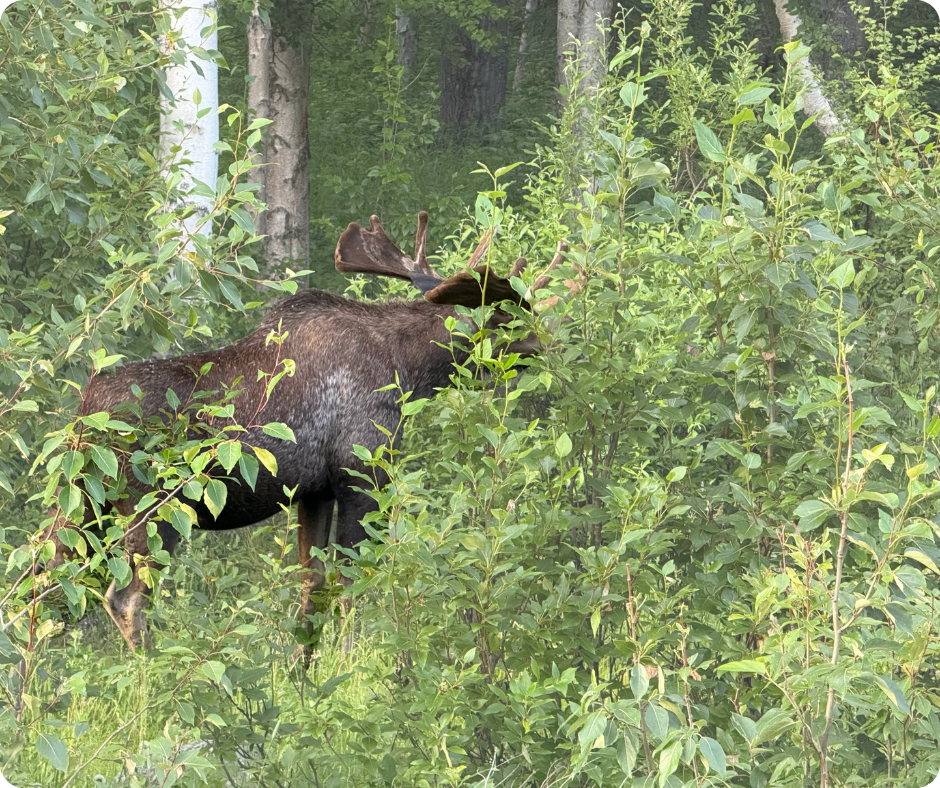
Moose can be dangerous any time of year, but a few seasons stand out.
| Season | Why moose are edgy |
|---|---|
| Winter into early spring | Deep snow pushes moose into neighborhoods and onto trails and roads. They're hungry, tired and short-tempered. |
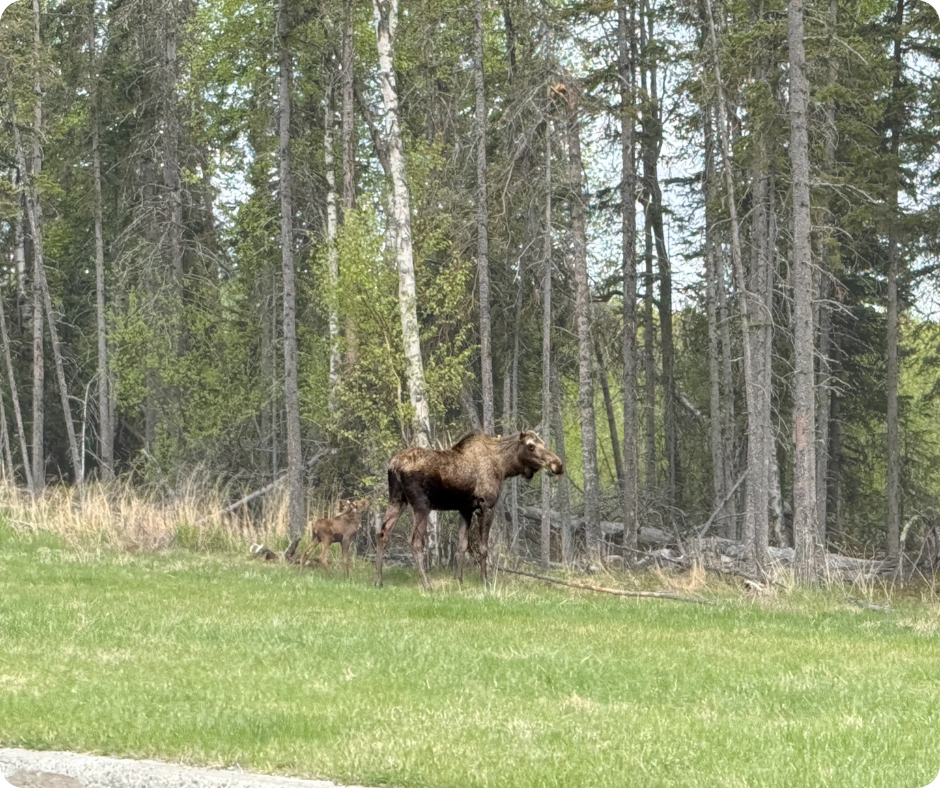
| Late spring and summer | Cows with young calves are very protective and will attack anyone who comes too close. |
| Late September and October | Bulls in the mating season can be aggressive. |
In a snowy winter, ADF&G biologists see more moose in town and more conflicts with people and pets. A tired moose in deep snow is less likely to move off the trail for you.
Read the warning signs.
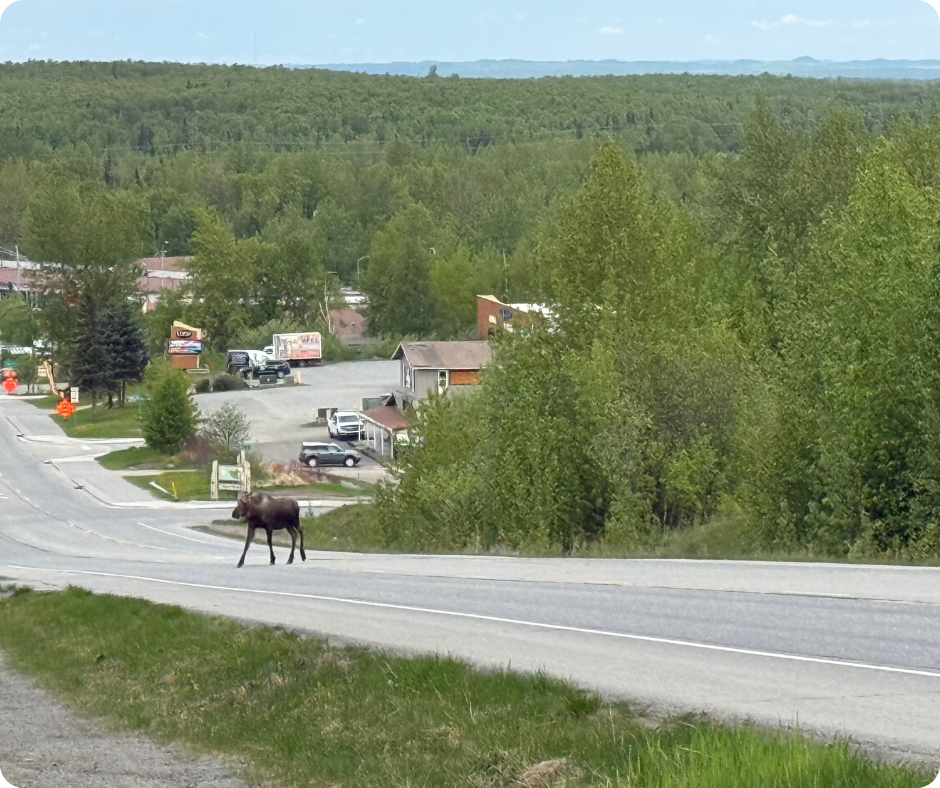
A moose usually tells you when you're too close. ADF&G lists these signs of a stressed moose:
- Stops what it's doing and stares at you
- Ears pinned back
- Hair raised on the neck and back
- Licking its lips
- Moving toward you
If you see any of these, you're too close. Back away and give the moose more room.
If you see a moose.
- Stop and shorten the leash. Keep your dog close and calm. A barking or lunging dog can upset a moose.
- Give it an extremely wide berth. ADF&G recommends extra space when you have a dog with you. If the moose is on the trail, turn around and go back the way you came.
- Never let your dog chase a moose. This includes your own fenced yard.
- Put something solid between you. If you must pass, use trees, snow berms, vehicles or buildings as a barrier.
- Be patient. Wait at a distance for the moose to move on, and never corner it.
If a moose charges.
Unlike with bears, running from a moose is okay. ADF&G says not to wait to find out whether a charge is a bluff.
- Run and get behind something solid, like a tree, a car or a building. Moose usually won't chase you far.
- If you're knocked down, curl into a ball, protect your head with your hands and stay still until the moose moves away.
This is one of the best reasons to keep your dog on a leash. An off-leash dog that runs back to you may bring the moose right along with it.
Before you open the door.
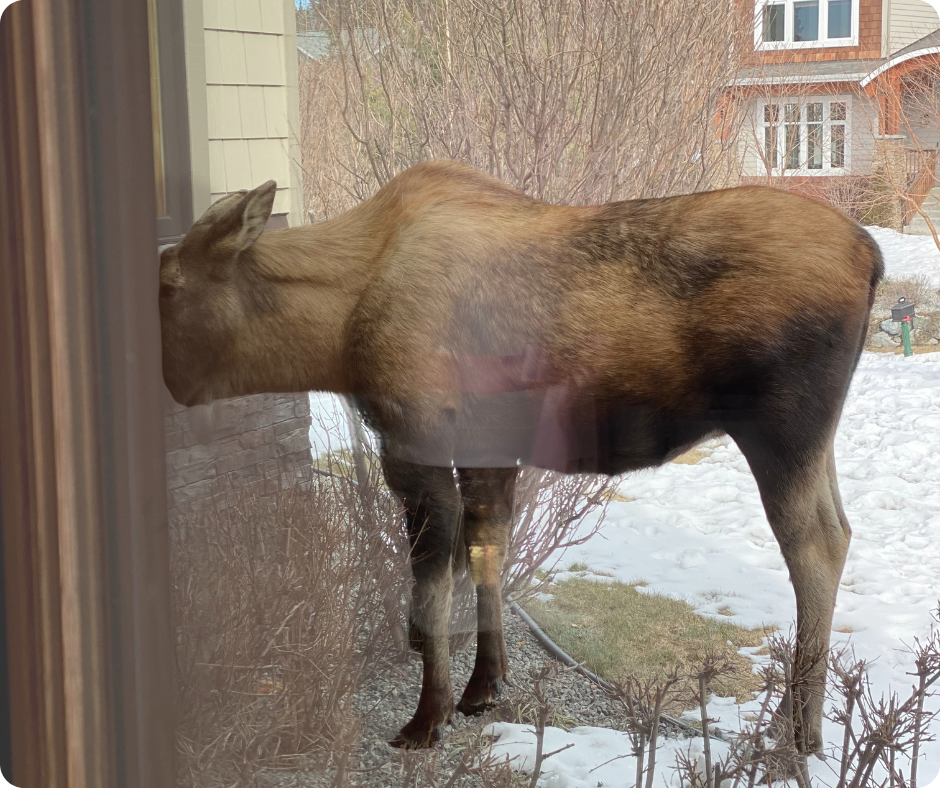
Many moose encounters happen right at home. ADF&G biologist Cory Stantorf suggests taking a peek around before you let dogs out in the morning.
- Check the yard and driveway before letting your dog out, especially at dawn and dusk.
- Turn on an outdoor light during dark winter mornings.
- Keep dogs leashed or supervised, even in a fenced yard, when moose are in the neighborhood.
After an encounter.
If a moose kicked or stepped on your dog, see a veterinarian right away, even if your dog seems fine. Injuries from a kick aren't always visible from the outside.
It's also normal for a dog to be nervous on that route for a while afterward. Short, calm walks in a new area can help them feel safe again.
Teach the skills that help.
A few everyday skills make moose encounters much safer:
- A solid "leave it" so your dog turns away from wildlife
- A reliable recall in case your dog ever slips the leash
- A "watch me" to keep your dog's eyes on you, not the moose
Practice at home, then on quiet walks, before you need them on the trail.
Frequently asked questions.
Will a moose attack my dog?
It can. Moose see dogs as threats, and they're most likely to react in deep snow, around calves or when a dog barks or chases.
Should I let go of the leash?
Your safety comes first. Get behind something solid. A leashed dog is much less likely to provoke a chase in the first place.
How close is too close?
There's no safe number. If the moose shows any warning sign, you're too close.
Is it okay to feed moose?
No. It's illegal in Alaska, and moose that are fed can become aggressive toward people.
Out on the trails all winter.
Our team walks dogs across Anchorage and Eagle River year-round, and moose are part of everyday life here. A little knowledge and a short leash go a long way.
Keep it in your pocket.
Print the Moose Safety Pocket Card for every leash bag in the house. Want help keeping your dog active this winter? We're glad to help.
Sources: ADF&G: What to Do About Aggressive Moose · ADF&G: Staying Safe in Moose Country · ADF&G: Moose safety activity packet · Alaska's News Source, Jan. 2023 · Alaska's News Source, Jan. 2026 · Alaska's News Source, Apr. 2026


